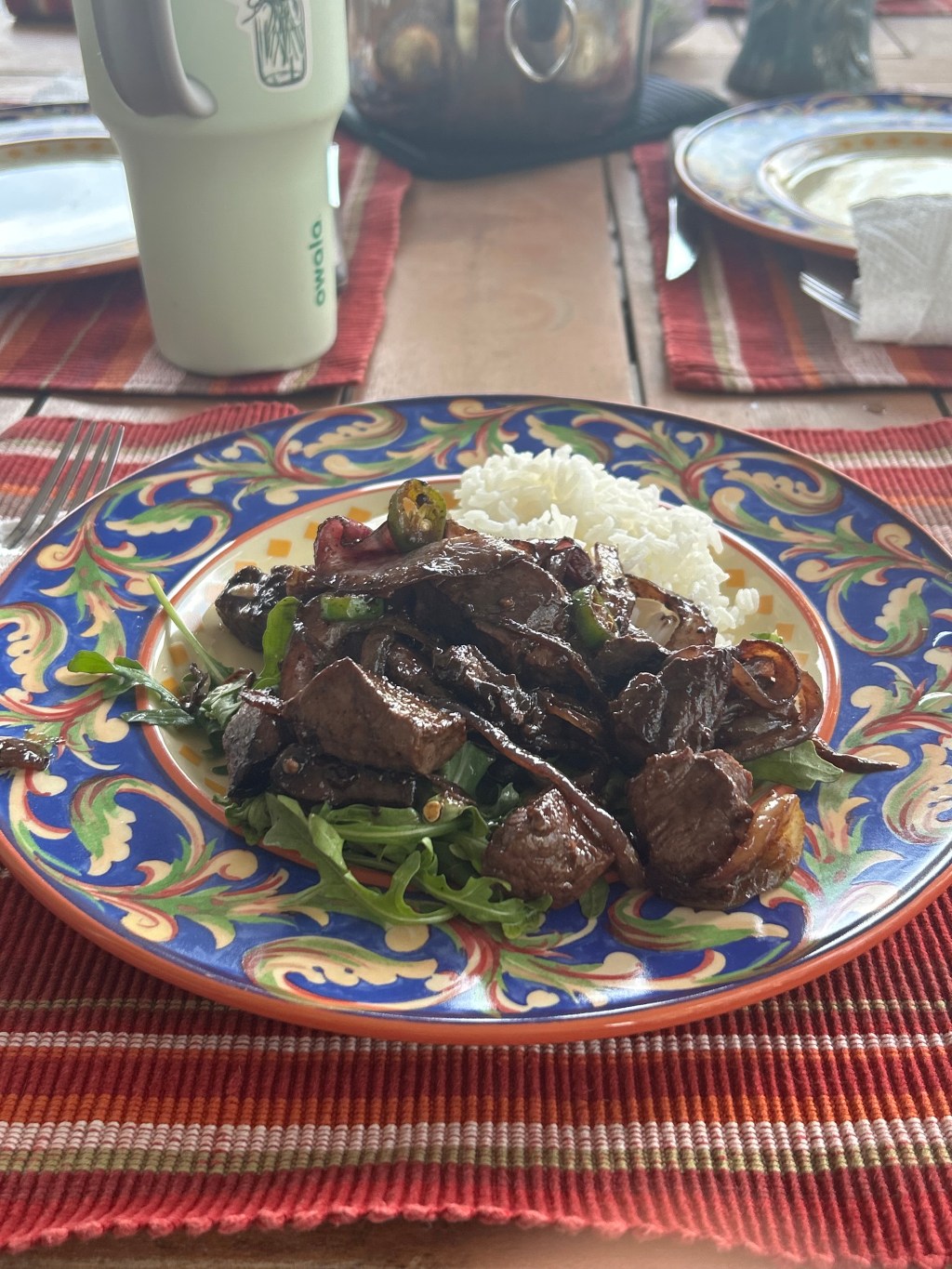
When I was growing up, we often ate out on Sunday after church. I would beg to go to McDonalds. I wanted the Happy Meal, thank you. My father rarely caved to that desire. We had other places we would go, real restaurants. Eventually, I moved into my parenthood years, and I began to understand my own parents’ aversion to fast food. There is much better food out there.
Over time, I grew in my own nutritional understanding, and my repulsion of it deepened. I’m not saying I won’t eat it. I still think McDonald’s fries are just about unbeatable when hot. But I now understand that 1 – my body does not need all those calories and 2 – the nutritional value is far below the caloric intake. In other words, I’m full, and I got it quickly, but a steady diet of this – even as just one meal a day – would wreck my weight and my metabolic health. Fast food takes care of my immediate hunger and cravings. It even tastes good, but it makes a terrible lifestyle choice.
Just as we have lots of food options and need to choose wisely, so too, we must choose wisely from the smorgasbord of options for spiritual growth. With the advent of the internet and social media, there has been an explosion of Christian content as well as secular. Just as there are apps to track your eating, there are apps to track your prayer life and Bible study time. There are influencers who will tell you just what to eat to look like them. And there are influencers who will give you five steps to a more effective prayer life. The algorithms will serve up whatever we are craving.
With this in mind, I just read a thought provoking essay by Freya India. Freya is in her late twenties and exploring Christianity. She wasn’t raised in church which makes her observations about a trend in the Christian internet sphere all the more insightful. She wrote about a number of problems with this Christian version of internet advice. She examines the commercialization of it (Keep in mind that often something is being sold.) as well as the way it may actually lead to isolation. Her post definitely got me thinking.
My experience is so different from hers for lots of reasons. First, I’m in a totally different generation. I also was raised in church and have personally been in my Bible since I was thirteen, long before the advent of the internet. The internet has had almost no impact on my spiritual life. For me, it is merely a tool that allows me to find good teachers whom I probably wouldn’t have bumped into otherwise. I use Sign Up genius as part of a prayer and fasting group, and get a fifteen minute singing devotional that I sometimes listen to in addition to my own reading.
In other words, my knowledge and understanding of scripture were carefully laid early in life by listening to teachers and reading my Bible (hard copy version). I have been learning to pray for just as long. I have watched it modeled by believers I had close contact with and developed a deep prayer walk over many years.
As I read Freya’s piece, I couldn’t help but think: Much of what is offered for Christian content on the internet, if not used well, is the fast food of spiritual life. At best, it may qualify as a healthy snack. This “food” is quick and easy, but it is not well rounded nutrition that helps us grow.
I am not arguing that it’s “wrong;” I am arguing that it should not be our primary diet of spiritual food. I have come across reels that I found inspiring or thought provoking and have walked away better because of them. BUT these are not my primary source of nourishment. They are more like a small serving of hot French fries or in some cases the perfect peach. They bring me delight, but it is my time in my Bible, in prayer, and in fellowship with other believers that meets my needs and keeps me healthy.
So what is the problem with a primary diet of social media Christian material? Isn’t this just a new way of doing the old thing? I don’t think so. God created us for relationship, first with Himself and then with others. The two greatest commandments He gives are “love the Lord your God with all your heart, soul and mind” followed by “love your neighbor as yourself.”
The internet does not build relationships. It can introduce us to people and ideas, but it cannot develop relationships. That is done best through face to face contact. God wants that with us. He wants us to pour out our hearts before Him (also known as prayer). He in turn wants us to listen to His heart (reading His Word). No app or reel can replace that. They are not a give and take form of communication.
God is capable of using anything to get our attention, but when the moment ends on our feed, what happens to our attention? How well do we soak in and meditate on even the good stuff that comes through? Generally, we just keep scrolling. After all, the real reason we are scrolling at all is for ENTERTAINMENT. We must be honest with ourselves and not conflate entertainment with spiritual growth.
I’ve heard it said that “attention is the most basic form of love.” But if the only attention we are giving God is fifteen seconds here, fifteen minutes there, one could safely question the quality of our love and the healthiness of our relationship. Healthy relationships mean investing time and energy.
Freya wrote about apps that track your “prayer streak.” I get it, but I am bothered. Streaks are a way we encourage ourselves to create a new habit, but let me show you a slightly different perspective. What if the reason a friend called you was only to keep a streak going? How valued do you feel? Something feels very off about gamifying our relationship with God. So, a prayer streak is more like fast food. It briefly meets a need, but isn’t truly nourishing. It may be a good way to get you started, but it shouldn’t be the way you maintain the relationship.
I know Snap Chat keeps streaks, but I’m betting that even if you have a streak with a friend, that at some point you have deeper communication than Snap Chat. It certainly can function as a quick way to remind you of someone, but it cannot replace authentic communication.
I acknowledge that there may be times a quick meal is all we have time for. This is true for physical food as well as spiritual. When we travel, this often means most meals out. But by the time we get home, all we want is a home cooked meal. We miss the simplicity, the smaller portions. Eating out a lot is hard on the wallet and the waistline.
Similarly, our time with God, in His Word and in prayer, should become like good whole meals. When we practice these regularly, we miss them when our routines are upset. We may make do with other sources, but coming back to deeper contact with God is a relief.
How are we using this tool of social media and the internet? It is one that should be handled carefully. The Christian content can be just as much a distraction as the secular content. Sure, it’s probably better for you, but it can’t replace the one on one time with God or with other believers. This time is so much more than entertainment.
So maybe you’ve switched from reels of junk food to reels of fruits and veggies, but it may be time for you to set all that aside. Stop calling entertainment spiritual nutrition. Skip the drive through Christianity of the internet. Instead, pull up a chair to the table. Open God’s Word and your heart and find the meal He has for you there.
If you enjoyed this post and know someone else who might as well, please feel free to pass it on.
If you’re curious about Freya’s article “The Commodification of Christianity,” it’s worth the read. Her substack is titled GIRLS.


Leave a Reply