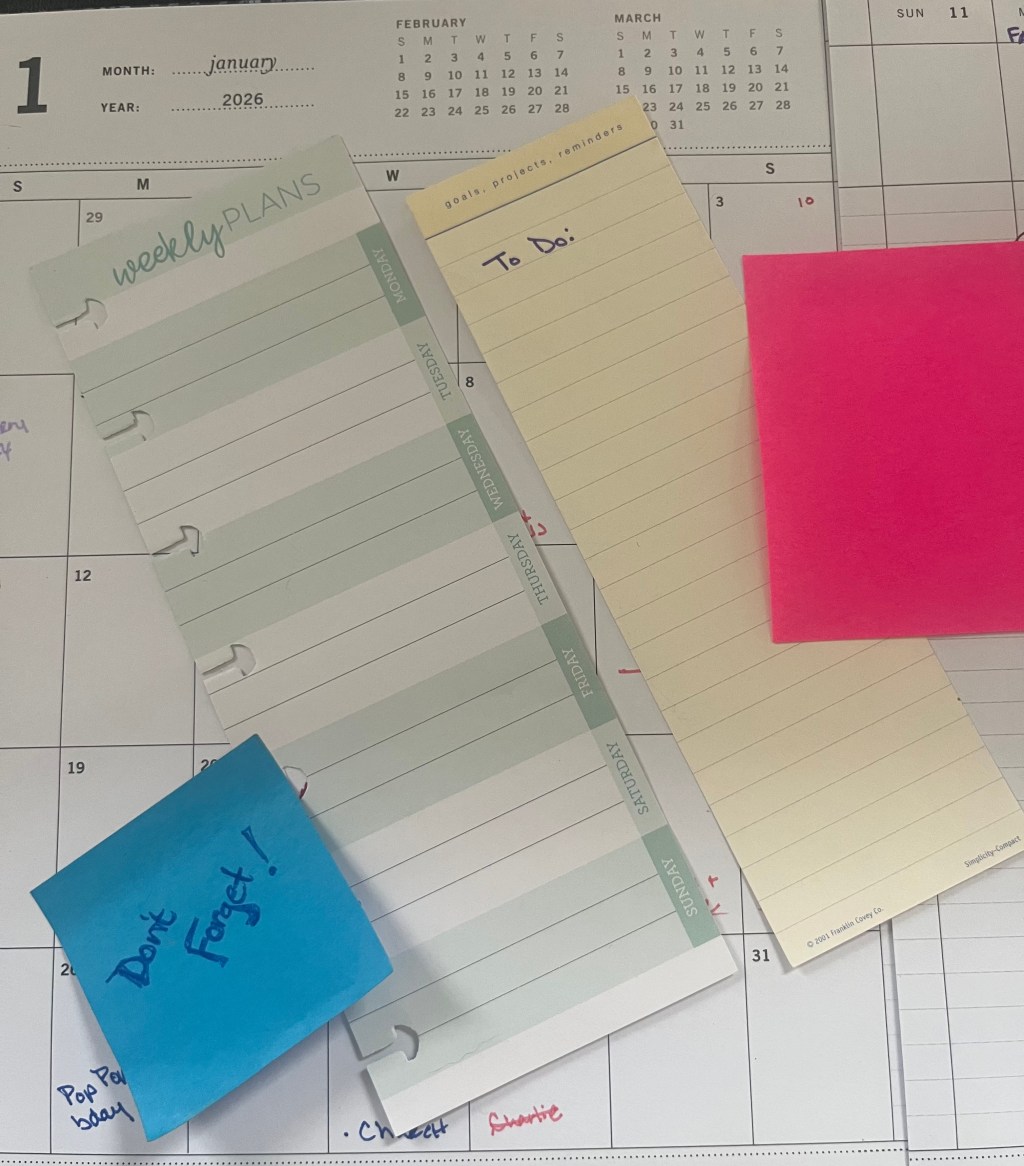
The American mindset is to celebrate busyness. We value it. Just ask us how we are. If we don’t say “fine,” we will probably answer “busy.” We believe that busyness is the opposite of laziness. Busy means we are productive. We have all sorts of books telling us how to manage our time, use it more efficiently, get more in. Our to-do lists are endless.
Productivity is not wrong, but the problem for the American Christian is that Satan uses our busyness to edge God out of our lives. We have come to believe that we must do _________, ____________, or ______________, or we are not living to our potential; we are letting others down. Sure, we can do that one more thing. After all, isn’t laziness one of the seven deadly sins?
When we are not busy, we are entertaining ourselves. Scrolling the internet or flipping on the TV is easy. After all, we deserve a break from the grind of busyness. Although entertainment, like busyness, is not wrong, Satan uses entertainment to distract us as well. We often allow it to push God to the background. We’ll get to Him in a minute.
If Christians were asked if God was important to them, most would say yes. However, where we spend our time and effort reveals our real values. Here is a moment of brutal honesty: if we don’t have “time” for God, He is not a priority at all, let alone our top priority.
We have this longing for meaning and purpose, but meaning and purpose aren’t found in busyness or entertainment. We chase after things that leave us unfulfilled, but we don’t dwell on that because who has time for that. If we reflect at all, we know something isn’t quite right, but we aren’t sure how to fix it, so we continue in the same pattern.
Yet the longing is there. Most have a sense that there is something bigger. There is an innate understanding that we are small but a part of something big. We can’t quite explain it or wrap our minds around it, so we leave it alone, avoid it. Yet, we wish…
God speaks to disordered priorities when the Jewish exiles return to their homeland. They are busy providing for their own homes and needs. That seems completely reasonable, but in Haggai 1, God says, “The wage earner puts his wages into a bag with a hole in it.” They had neglected rebuilding the temple. God says HE has caused their efforts to fail because they had not made Him a priority. In chapter 2, after they have begun to move in obedience, He promises that He will provide all those things they had been chasing after.
In contrast to this in Exodus, when the construction of the first tabernacle was completed in obedience to God’s very specific instructions, then His glory filled it, fire shot out, and the people experienced such awe that they shouted out and fell on their faces. The exact same thing happened when a more permanent temple was constructed under King Solomon. Then, we read in Acts how after Jesus ascension, believers met and were in prayer, and again the presence of God descended. This time, instead of filling a tabernacle or a temple, the people themselves were filled with God’s presence. Flames of fire appeared above their heads. They too praised God in wonder and awe, and those around them noticed.
Marty Solomon is a rabbinically trained believer who has a podcast (BEMA) where he teaches what he has learned. Rabbinically trained means that he seeks to understand the scriptures from a Jewish mindset. He sees a truth in these three parallel moments. This truth is not directly taught in scripture; it is something he infers. But it resonated with me, and I wanted to pass it on.
In each case, the people were making space for God. In the first two, it was physical space. In the third case, it was a mental and emotional space. And when the space was made, God filled it with His presence and power. The end result was that people gave glory to God. And in Haggai, when the people didn’t give God the space, He removed his blessing from them.
I take the scriptures at their word when they say that all believers are filled with the Holy Spirit – that the Holy Spirit is our seal of a promise that we belong to God. I don’t believe that He comes and goes. However, I also believe that we are perfectly capable of ignoring Him or pushing Him into the background of our lives. In fact, I think this is far more the norm among Christians than otherwise. Busyness and entertainment are the two primary ways this happens.
If we want God to be actively present in our lives, if we want to know the awe that comes as a result, then we need to deliberately create space for Him in our lives. We need to make Him our top priority. He doesn’t accept second position to our families, our friends, our studies, or our jobs. We give space to Him first, and then trust and watch as He fills in our deficiencies.
In my last post I mentioned the biological value of practicing spiritual disciplines. In this post I want you to understand that practicing these can result in far more important things than balancing our dopamine. If you are struggling with feeling distant from God, if you want to know the awe of His presence, then I am going to challenge you to choose from the following spiritual disciplines. Build space for God in your life.
However, this may require you to address some of your busyness and entertainment. God may ask you to set something aside in order to create the space. That is between you and Him. Do you want to see Him at work within and around you? What are you willing to give Him?
Note that not all of these disciplines are daily habits. Some of them God may lead you back to at different times in your life.
Reading your Bible – I talk about this regularly. There is nothing quite as effective as being in God’s word. That said, there’s no one way to do it. Psalm 1 says, “Blessed is the man… whose delight is in the law of the Lord and who meditates on His law day and night.” Who doesn’t want to be blessed?
Prayer – This is conversation with God. I can’t imagine life without it. Again, there are multiple ways to do this. My favorite is journaling, but there are others from hourly prayer (choosing to pray at regular intervals throughout the day), to contemplative prayer (praying a specific phrase over and over), to praying chosen scriptures. The point is not in how you pray, it is the act of reaching out to God. Philippians 4:4-7 encourages us to rejoice in the Lord and to take all of our worries to Him.
Memorizing Scripture – This is one that I have picked up and dropped over and over again. I may not have a lifetime of memorizing scripture, but I have more verses in my head than if I’d never done it at all. Why memorize? Psalm 119:11 answers that with, “I have hidden Your word in my heart that I might not sin against You.” Scripture becomes the line of defense which the enemy has to cross to get access to your thoughts. It is also how Jesus answered temptation when facing Satan in the wilderness.
Fasting – This has gained popularity in health circles but has been used for spiritual purposes long before that. Jesus fasted just before he began his public ministry. It prepared him for Satan’s temptations. Fasting is more than learning self control. It used to turn our focus to God. Fasting is about allowing hunger to remind us of our weakness and our need for Him.
Gratitude – Several decades ago now, God used this specifically to change my attitude and approach to life. I was becoming a complainer. God used gratitude to root that out. He has since used it to combat periods of anxiousness and depression. This can take the form of simply thanking God for three things that are specific to each day. I find that keeping a written record of them is very effective.
Generosity – This is holding the gifts God has given you with an open hand and choosing to look for moments to give above and beyond. It is asking God to open your eyes, heart and hands and allow Him to use that as He sees fit.
Solitude & Silence – I have not truly practiced this one but would like to. This is giving eight or more hours of a day to being alone, without entertainment or things to do, watch or listen to beyond a Bible and a journal. People who practice this say it takes several hours for their brains to stop spinning and for them to begin to hear what God is whispering to their hearts.
None of these are “silver bullets” to solving all of life’s problems, but ALL of them will reap benefits in our lives. When we turn our focus to the Almighty God, He changes us. James promises, “Draw near to God, and He will draw near to You.”
If we aren’t experiencing God, maybe it’s time to change our expectations of how He works. It’s easy to believe that “I’m a good Christian. I…” then list all the things we do. The question for me is do I want more of God? If the answer is yes, then what am I willing to give Him? Am I willing to let go of my desires? Am I willing to fast and see what happens, or spend time in solitude, or commit to memorizing scripture? Do I really want to see Him at work, to know His presence and power? Or is all that just lip service and easily pushed aside for busyness and entertainment? What about you?
 A Cup of Grace - with a shot of espresso
Leave a comment